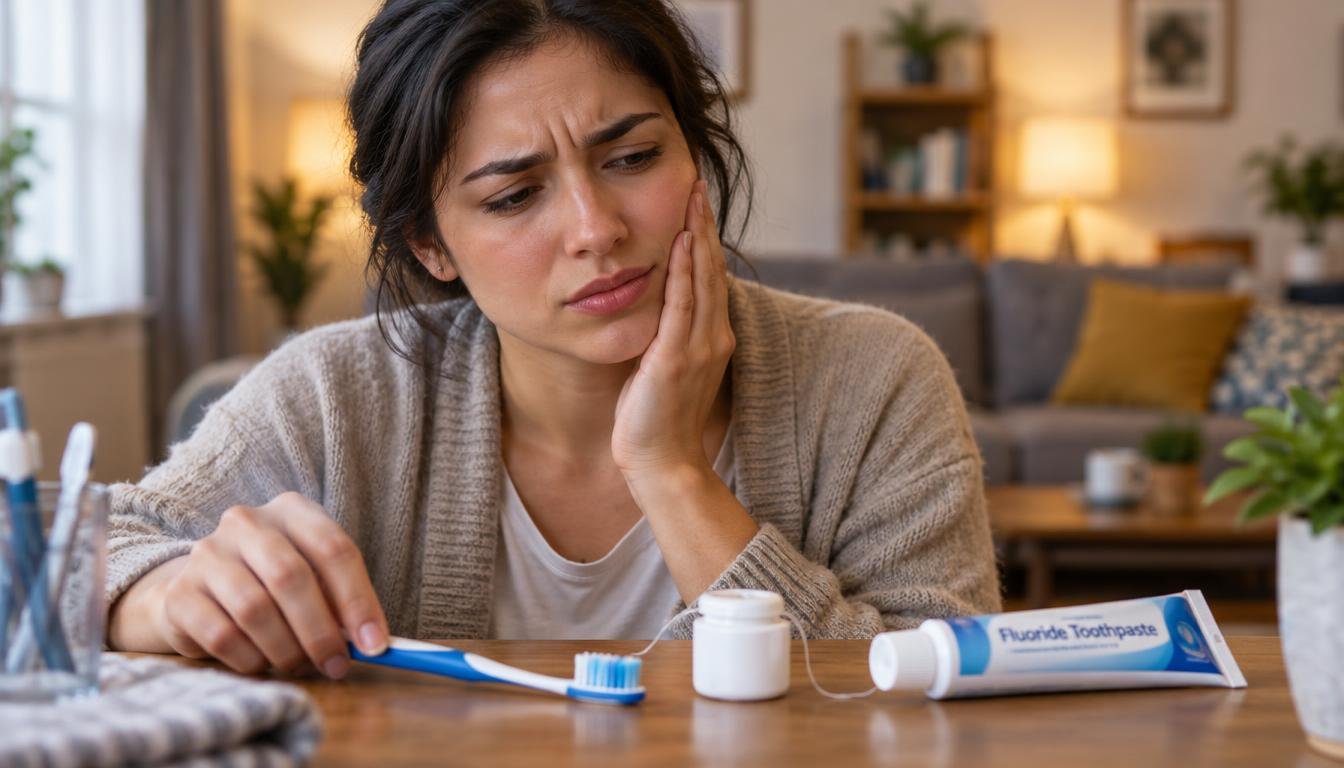
A severe toothache can signal a problem that needs a dentist, even if the pain eases for a while. Strong or lasting tooth pain can affect eating, sleep, and daily tasks. Home measures may ease discomfort for a short time, but they cannot find or treat the cause.
The pulp is the soft tissue inside a tooth that contains nerves and blood vessels. Pain may begin when this tissue or the nearby gum becomes irritated or damaged. A dentist can check what is happening and advise you on care.
Key Takeaways
- Arrange a dental visit for severe or persistent tooth pain.
- Warm water and gentle flossing may remove trapped food.
- A cold pack outside the cheek may ease pain temporarily.
- Use over-the-counter (OTC) pain medicine only as directed.
- Facial or neck swelling with trouble breathing or swallowing needs emergency medical care.
- Temporary relief does not show that the cause has gone away.
Arrange dental care rather than relying on temporary relief to solve the problem.
What to Do for a Severe Toothache: Causes and When to Seek Help
If severe pain starts at home, first rinse with warm water and gently floss in case food is trapped. These steps may ease irritation, but they do not show what caused the tooth pain.
Use simple measures for temporary relief while you arrange dental care. A rinse or cold pack cannot repair a cavity or treat an infection. Call your dentist and describe where the pain is, when it began, and what makes it worse.
Use home measures only for temporary comfort. Arrange dental care to find and treat the cause.
For unbearable tooth pain, try these steps in order. Stop if flossing causes sharp pain or worsens the sore area.
- Rinse gently with warm water to clear loose debris.
- Floss carefully around the sore tooth to remove trapped food.
- Swish warm saltwater for 30 seconds, then spit it out.
- Hold a cold pack against the outside of your cheek for about 20 minutes.
To make a saltwater rinse, mix 1/2 teaspoon of salt into 8 ounces of water. The warm saltwater rinse may soothe the area, but it does not cure tooth decay or an abscess.
Start with a gentle rinse and floss
Warm water can wash away food without scraping the tooth. Floss slowly along each side of the sore tooth, and avoid snapping the floss against your gums.
If food was pressing on the gum, removing it may reduce that pressure. Pain that remains still needs attention, even if the rinse leaves your mouth feeling cleaner.
Use temporary comfort measures safely
A cold pack can reduce discomfort when held outside the cheek for about 20 minutes. You can repeat this several times a day, with a cloth between the pack and your skin.
When you call, give the dentist as much detail as you can. Many dental offices keep time in their daily schedules for patients with urgent needs.
Do not put an aspirin tablet on the tooth or gum, even if you need quick relief.
What Causes Severe Tooth Pain and Which Symptoms Matter?
A sharp pain when biting can come from a crack or cavity, while a persistent ache can have several causes. Tooth pain may feel dull, sharp, or throbbing, and the feeling alone cannot confirm the problem.
Toothache symptoms cannot reliably identify the cause without a dental examination. Heat or cold sensitivity, gum swelling, fever, or a bad taste may also point to a dental problem.
Common causes and what they can feel like
Tooth decay can form a cavity that hurts with pressure, sweets, or temperature changes. A cracked tooth may cause sharp pain when you bite or release your bite.
An abscess is a pocket of infection near a tooth or gum. It may cause throbbing pain, swelling, a bad taste, or bad breath.
A damaged filling or crown can expose sensitive parts of a tooth. Grinding or clenching, also called bruxism, can cause soreness in several teeth or the jaw.
Gum disease can lead to sore, swollen gums and discomfort around teeth. A headache or fever may occur with dental pain, but neither symptom identifies its cause by itself.
Symptoms that point to a dental problem
Toothache symptoms can include pain that starts with hot or cold food, pain when chewing, or a steady ache. Some people notice swelling or a bitter taste before they see a dentist.
Temporary gum irritation may settle within a day or two. Pain from a cavity or abscess can come and go without resolving, so a quiet spell does not confirm healing.
A dentist can assess the tooth, gums, and nearby tissues to find the source. Describe the pain’s location and pattern, along with any changes you have noticed.
Pain that briefly fades does not prove the underlying problem has gone away.
Which OTC Pain Relief Is Safe for a Toothache?
For temporary toothache relief, an NSAID such as ibuprofen is usually the first medicine to consider if it is safe for you. NSAIDs are medicines that reduce pain and inflammation.
NSAIDs alone or with acetaminophen are first-line options for acute dental pain. Opioids are not the default choice; dental guidance reserves them for cases when first-line medicine is not enough or NSAIDs are not safe.
The ADA lists these standard OTC doses. They are not a personal dosing plan, so follow the directions on your product label.
| Medicine | ADA standard OTC dose | Key safety point |
|---|---|---|
| Ibuprofen | 200 mg | May cause stomach upset, bleeding, kidney injury, or heart risks |
| Acetaminophen | 325 mg | Count all sources toward the daily limit |
| Acetaminophen | 500 mg | Count all sources toward the daily limit |
More than 4,000 mg of acetaminophen in one day has been linked with acute liver failure. Cold and flu combination medicines may also contain acetaminophen.
Check the active ingredients before taking more than one product. Taking two medicines with acetaminophen can push your daily total above the limit without you noticing.
Ibuprofen and other NSAIDs can cause nausea, heartburn, abdominal pain, or bleeding. They may also raise the risk of heart problems and kidney injury.
Your health conditions and other medicines can change which option is safe. Follow the product label, and ask a clinician or pharmacist if you are unsure.
Check every medicine label for acetaminophen before combining products.
When Is a Toothache an Emergency?
Trouble breathing or swallowing alongside face or neck swelling is a reason to seek emergency medical care now. Do not wait for a dental appointment when swelling affects breathing or swallowing.
Get prompt dental advice for facial swelling, fever, or severe pain that medicine does not ease. Sudden toothache with jaw pain and fever or swelling also needs urgent assessment.
Signs that need urgent dental care
Call a dentist promptly if you notice any of these warning signs:
- Swelling in your face or jaw
- Fever, including a temperature over 101°F (38.33°C)
- Severe pain that does not respond to medication
- Pain or difficulty when opening your mouth
- Swelling below the eye or a lump on your jaw
These signs can have different causes, and one symptom alone does not prove a serious infection. A dentist can assess the pain, swelling, and changes in your mouth.
When to get emergency medical help
Face or neck swelling can spread through soft tissues and may threaten the airway. Trouble breathing or swallowing with this swelling calls for emergency medical care, not a routine dental visit.
A systemic infection affects the body beyond the mouth. Possible sepsis symptoms include confusion, fever or feeling very cold, clammy skin, a fast heart rate or weak pulse, severe discomfort, and shortness of breath.
Other possible signs include chills, rapid breathing, low blood pressure, unusual weakness, or very low body temperature. No single sign confirms sepsis, but symptoms with a known or suspected infection require urgent attention.
Call 911 or go to an emergency department if you suspect sepsis with an infection. Do not drive yourself if you feel confused or too weak to travel safely.
If sepsis is suspected, call 911 or go to an emergency department rather than waiting for a dental appointment.
How Does a Dentist Find and Treat the Cause?
A dentist will examine the tooth and may take an X-ray to look for problems beneath the gums. The visit starts with questions about your symptoms and when they began.
The dentist chooses treatment based on the damaged or infected tissue. An exam and X-ray can help show whether the problem affects the tooth’s surface, inner pulp, or nearby tissues.
What an examination can reveal
Your dentist may ask what triggers the pain, how long it lasts, and whether it comes and goes. The dentist may check the tooth, gums, bite, and nearby areas for damage or swelling.
An X-ray can reveal decay or changes that are hard to see during an exam. The findings help the dentist decide whether the tooth can be repaired or needs another treatment.
Treatments that address the source
A small cavity may need a filling. A larger cavity or fracture may need a crown, which covers and strengthens the tooth.
| Problem | Possible dental treatment | What the treatment addresses |
|---|---|---|
| Small cavity | Filling | Damaged tooth tissue |
| Larger cavity or fracture | Crown | Protection and strength |
| Infected pulp | Root canal therapy | Removal of inflamed pulp; cleaning and filling the tooth interior |
Root canal therapy removes inflamed pulp, then cleans and fills the inside of the tooth. This can keep a tooth that might otherwise need removal.
A dental abscess may need drainage to release the collected pus. If damage is too severe for repair, the dentist may recommend extraction.
The right procedure depends on what the examination finds, not on the pain pattern alone.
Why Can Tooth Pain Persist or Keep You Awake?
Pain medicine can fall short when the cause is an inflamed nerve, a crack, or an infection that still needs treatment. It may ease symptoms without fixing the source.
No home method reliably stops tooth nerve pain instantly. Use OTC pain medicine only as directed, try a cold compress outside your cheek, and contact a dentist promptly.
Why nerve-like pain may resist medication
A cavity, crack, inflamed pulp, or abscess can keep sending pain signals until the cause is treated. Painkillers may lower discomfort for a while, but they cannot repair a damaged tooth.
Tooth pain may throb more at night or interrupt sleep when you lie down. Pain that comes and goes can still come from a cavity or abscess that has not healed.
Do not take extra medicine because pain returns before you expect it to. Check the label and avoid taking more than the directed amount.
What to do when extreme pain keeps you awake
If extreme tooth pain prevents sleep, call a dentist for urgent advice. Make the call sooner if the pain is getting worse or comes with swelling or fever.
Tell the office how long the pain has lasted and whether it changes when you bite or drink. These details can help the dentist decide how quickly you need an exam.
A toothache lasting longer than two days, facial or jaw swelling, or pain when opening your mouth wide warrants a call. Contact a dentist if pain lasts longer than two days, worsens, or keeps returning.
Can Home Remedies or Antibiotics Cure a Tooth Infection?
A home rinse cannot cure a tooth infection because it cannot remove the infected or damaged tissue causing the problem. Saltwater may soothe discomfort briefly, but it does not treat the source of an abscess.
Dental treatment is the main way to address most pulpal or periapical pain and swelling. Periapical means near the tip of a tooth’s root.
Hydrogen peroxide does not cure a tooth infection and must not be swallowed. Home remedies cannot clean infected tissue inside a tooth or drain an abscess.
Antibiotics are not recommended for most pulpal and periapical dental pain or swelling. For adults who are not severely immunocompromised, dentists prioritize dental treatment for symptomatic irreversible pulpitis, symptomatic apical periodontitis, and localized acute apical abscess.
Those conditions may need treatment such as pulp care, root canal treatment, or drainage. Antibiotics alone do not remove the cause inside a damaged tooth.
A dentist may prescribe antibiotics if a dental condition progresses to systemic involvement, such as fever or malaise. Malaise means feeling generally unwell or weak.
Do not use leftover antibiotics or delay dental treatment while waiting for a home remedy to work.
How Can You Reduce the Risk of Another Toothache?
Consistent cleaning and routine dental care can reduce the chance that small problems become painful. Daily habits help protect your teeth and gums, though they cannot treat a current problem.
Brush with fluoride toothpaste two to three times a day and floss once daily. Regular exams and cleanings can help your dentist find dental problems early.
Brush two to three times daily, floss once daily, and keep regular dental appointments.
Build these habits into your routine:
- Brush two to three times daily with fluoride toothpaste.
- Floss once each day to clean between teeth.
- Use antibacterial mouthwash twice daily if it is appropriate for you.
- Keep regular dental exams and cleanings.
Ask your dentist whether fluoride treatments or sealants could help protect your teeth. These options may suit some people, based on their dental health and risk of decay.
Limiting sugary foods and drinks can also help reduce tooth decay. Try not to sip sweet drinks over long periods, since that keeps sugar in contact with your teeth.
Gum disease and tooth decay can develop before you notice pain. Regular checkups help your dentist look for changes you might not see at home.
Keep regular dental appointments even when your teeth feel fine.
Conclusion
Severe tooth pain deserves attention because temporary relief does not show that the cause is gone. Home measures may help you feel more comfortable, but they cannot replace an exam or treatment from a dentist.
Call a dentist and describe where the pain is, how long it has lasted, and whether you have swelling or fever. Clear details can help the office understand your needs.
If facial or neck swelling makes it hard to breathe or swallow, seek emergency medical care now. Call a dentist with your symptoms today, or seek emergency medical care now if breathing or swallowing is difficult.