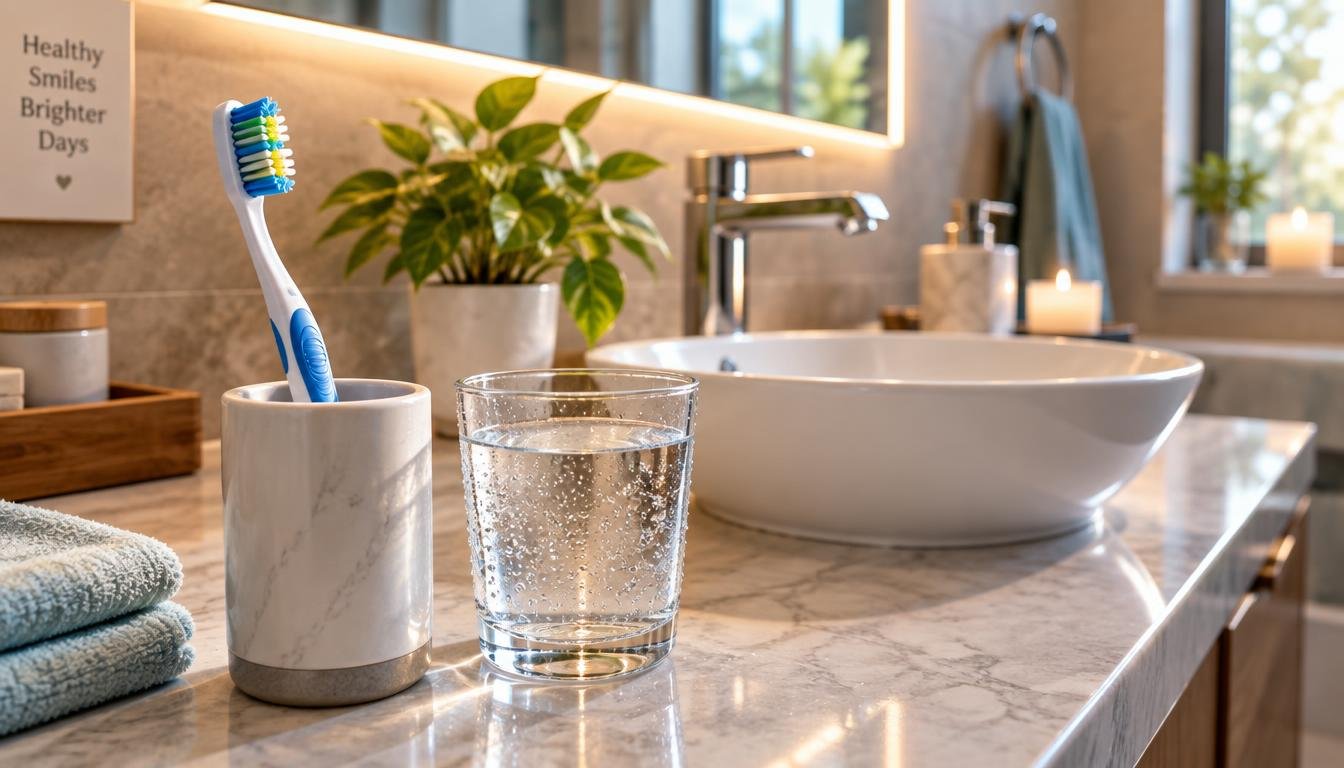
A few consistent daily habits can help keep teeth clean and lower the risk of tooth decay and gum disease. Plaque is a sticky, colorless film of bacteria that forms on teeth. When plaque builds up, it can harm your enamel and gums.
Good oral health supports more than a bright smile. It can help you avoid pain, protect your ability to eat, and keep small problems from growing. Your daily choices matter, even when your teeth look and feel fine.
This guide will help you build a routine for brushing, interdental cleaning, and other habits that support your teeth and gums. You will also learn when home care needs help from a dental professional.
There is no need to crowd your sink with products. A soft-bristled toothbrush, fluoride toothpaste, and a way to clean between teeth can cover the basics.
Good oral care works best when you make it part of your day. Small choices, repeated often, can lower the risk of tooth decay and gum disease.
A useful routine is one you can do carefully every day, not one built around extra products.
Key Takeaways
- Brush twice daily with fluoride toothpaste.
- Clean between your teeth every day.
- Choose tools you can use with care.
- Limit sugary foods and drinks.
- Ask a dentist about ongoing symptoms.
- Keep dental visits part of your care.
Why Does Daily Oral Care Matter for Teeth and Gums?
Plaque left on teeth can affect both enamel and gums, even when the buildup is difficult to see. Daily cleaning helps remove plaque before it can contribute to tooth decay or gum disease. Brush twice daily with fluoride toothpaste and clean between teeth once a day.
Daily brushing and interdental cleaning help remove plaque before it harms teeth and gums.
Plaque can produce acids that weaken enamel and raise the risk of cavities. Near the gum line, plaque can irritate the gums and lead to gingivitis, an early form of gum disease.
How Plaque Affects Teeth and Gums
Gingivitis may make gums red, swollen, or likely to bleed during brushing. Daily brushing and flossing can usually reverse gingivitis caused by plaque buildup. Persistent symptoms still deserve attention.
Disclosing tablets can make plaque easier to spot. Chew one as directed, then look for colored areas on your teeth. Those marks show places you may have missed while brushing.
To take care of your teeth, use these ten practical actions. Each numbered item combines two actions, for five easy-to-check pairs.
10 Ways to Take Care of Your Teeth
- Brush twice daily with fluoride toothpaste; clean every tooth surface.
- Clean between teeth daily; throw used floss away.
- Choose a soft-bristled brush; replace it on schedule.
- Limit sweets and sugary drinks; drink fluoridated water.
- Avoid smoking; follow dental advice for your personal risks.
These actions work together, but they do not all take the same time. Brushing covers the tooth surfaces you can reach with a brush, while interdental cleaning reaches spaces between teeth.
Small changes can make a routine easier to keep. Put your brush where you will see it, and keep floss or another cleaner within reach.
If gums are red, swollen or bleeding, take the change seriously rather than assuming it is normal.
How to Maintain Good Oral Hygiene: A Complete Daily Guide
The basic target is two careful minutes of brushing twice a day with fluoride toothpaste and a soft-bristled brush. Gentle pressure helps you clean without scraping your gums. Fluoride strengthens enamel and helps protect your teeth from decay.
Two minutes gives you time to reach every surface, not just the front teeth. A timer can help until the brushing routine feels familiar.
Brush for Two Minutes With Gentle, Complete Strokes
Use this six-step method to brush teeth with steady coverage. Move slowly enough to reach each area, and keep the bristles soft against your teeth.
- Apply fluoride toothpaste to a soft-bristled toothbrush.
- Angle the bristles toward the gumline at about 45 degrees.
- Use short, gentle back-and-forth strokes.
- Clean the outer surfaces of your teeth.
- Clean the inner surfaces of your teeth.
- Clean the chewing surfaces and your tongue.
Divide your mouth into sections so you do not rush past the back teeth. The inner surfaces can be easy to miss, especially behind the front teeth.
Brush along the gumline without pressing hard. Firm scrubbing does not make brushing more effective, and it can irritate your gums.
Brushing twice a day helps remove plaque before it hardens into tartar. If you have trouble reaching a spot, adjust your angle rather than pushing harder.
Choose a Toothbrush That Fits Your Needs
Both manual and powered toothbrushes can remove plaque effectively. Choose a comfortable brush that reaches your teeth, and check for the ADA Seal of Acceptance. The seal means the brush was evaluated for safety and effectiveness in removing plaque and reducing gingivitis. It does not promise a specific result for you.
| Brush type | Plaque-removal or design fact | Selection check |
|---|---|---|
| Manual | Can remove plaque effectively | Choose soft bristles and a comfortable handle |
| Powered | Can remove plaque effectively | Choose a brush you can guide across all surfaces |
| Child-sized | Small head reaches children’s tooth surfaces | Choose soft bristles and a small head |
A powered brush may feel easier to guide, but skill and coverage matter with either kind. For a child, choose a small head that can reach the back teeth and other tooth surfaces.
Replace a brush every three to four months, or sooner if the bristles look worn. Frayed bristles may not clean as well and can feel rough against the gums.
Replace a brush on the three-to-four-month schedule, or sooner when its bristles look matted or frayed.
How Do You Floss Without Hurting Your Gums?
Use floss gently against each tooth rather than snapping it down between the gums. A slow touch helps protect the gum line while removing food particles and plaque. Clean between your teeth once a day with floss or another interdental cleaner.
Flossing should feel controlled, not sharp or forceful. Use about two feet of dental floss so you can work with a clean section as you move between teeth.
Use a Gentle C-Shaped Technique
Ease the floss between two teeth with a gentle back-and-forth motion. Do not force it into a tight space or snap it against the gums.
When the floss reaches the gumline, curve it into a C around one tooth. Slide it up and down along the tooth and just beneath the gumline.
Repeat the motion against the next tooth before moving to another space. This helps clean both sides of each gap, where a toothbrush may not reach.
If the floss catches or shreds, do not yank it through. Try a gentler motion, or choose another interdental cleaner that fits your teeth.
Choose a Time and Floss Type You Can Stick With
Once-daily cleaning matters more than choosing morning or evening. You can brush or floss first, as long as you clean thoroughly with both.
Waxed and unwaxed floss are equally effective. Pick the type that slides between your teeth comfortably and is easy to handle every day.
Flossing can sometimes reveal a brief odor from trapped food or plaque. Persistent odor, bleeding, or pain calls for dental advice, especially if the problem continues.
Used floss can fray, lose effectiveness, or bring bacteria back into your mouth. Discard it after one use rather than trying to clean it.
Make flossing part of a daily habit you can keep. A regular time, such as before bed, can help you remember without making timing a rule.
Throw used floss away instead of rinsing and reusing it.
Which Tool Should You Use to Clean Between Teeth?
The right interdental cleaner is the one that reaches your spaces and that you can use consistently. Fit matters more than choosing a single tool for everyone. Floss often suits tight spaces, while interdental brushes can suit more open spaces.
Available options include floss, holders, threaders, picks, small interdental brushes, wooden or plastic picks, and water flossers. A floss holder or pick can be easier to grip than a loose strand.
Match the Cleaner to Your Teeth and Dexterity
String floss can work well when teeth sit close together. Threaders can guide floss around braces or dental work, while holders make the strand easier to control.
Interdental brushes fit spaces that are too open for string floss to clean well. They may also suit people with periodontitis, a form of gum disease that can leave larger spaces between teeth.
Floss picks are cleaning tools, not tools that dentists universally prohibit. They can help you reach between teeth, but use them gently and clean each space with care.
Water flossers send a stream of water between teeth and along the gumline. They may be practical when hand movement is limited or braces make string floss harder to manage.
Water Flossers and String Floss Have Different Strengths
Evidence does not establish one interdental tool as best for every person. The evidence for oral irrigators, another name for water flossers, remains limited and inconsistent.
A 2024 systematic review of seven randomized controlled trials found that most included studies favored water flossers over dental floss for plaque reduction. The review said water flossers may be an alternative for adults with limited manual dexterity, orthodontic treatment, or dental prostheses.
Water flossers can also remove plaque from hard-to-reach spaces between teeth. Results from a review do not mean that every user will get the same benefit.
| Tool | Where it may fit | Evidence or practical note |
|---|---|---|
| String floss | Tight spaces between teeth | Waxed and unwaxed types work equally well |
| Interdental brushes | Open spaces or periodontitis | Choose a brush that fits the gap |
| Floss picks | Spaces that need a handled tool | Use gently; picks are not universally prohibited |
| Water flossers | Braces, prostheses, or limited dexterity | Evidence is limited and inconsistent overall |
The ADA Seal of Acceptance on floss and other interdental cleaners means they were evaluated for safety and effectiveness in reducing plaque and gingivitis. It can help you compare products, but it does not select a tool for your specific needs.
Ask a dental professional to help choose a tool if braces, a prosthesis, periodontitis or limited hand dexterity makes cleaning difficult.
How Should Children Brush and Floss?
A child’s brushing routine should begin as soon as the first tooth appears. Start early, even if that first tooth comes through at about six months. Children should brush twice a day with a child-sized, soft-bristled toothbrush.
Choose a brush head small enough to reach each tooth surface, including the back teeth. A handle the child can hold may help, but an adult should still guide the routine.
Start When the First Tooth Appears
Begin brushing when the first tooth erupts, which may happen as early as six months. Clean the new tooth each day instead of waiting for more teeth to appear.
A child-sized brush with soft bristles can reach small teeth without feeling harsh. Check that the head fits comfortably inside your child’s mouth and can reach the back teeth.
Children need brushing twice daily. You can help by checking each side of the mouth and reminding your child to reach behind the front teeth.
Young children may want to brush by themselves. Let them practice, then help finish any surfaces they miss.
Use the Right Amount of Fluoride Toothpaste
For a child younger than three, use a smear of fluoridated toothpaste about the size of a grain of rice. From age three, use an amount about the size of a pea.
These small amounts help caregivers control how much toothpaste goes on the brush. Show your child the size before brushing, so a full brush of paste does not become the habit.
Stay close while your child brushes and remind them not to swallow toothpaste. Adults should supervise or assist until children can spit out excess toothpaste.
To check coverage, ask your child to open wide after brushing. Look for missed areas along the gumline, behind the front teeth, and on the chewing surfaces.
Keep supervising or assisting until your child can reliably spit out excess toothpaste.
What Order Should You Follow for Daily Mouth Care?
There is no required order for brushing and flossing, as long as both are done thoroughly. Choose a simple order that helps you remember each step. Clean between your teeth once a day, then brush and clean your tongue.
You can floss before or after brushing. The key is to clean between teeth fully and use fluoride toothpaste when you brush.
What Is the Right Oral Hygiene Routine Order?
A practical oral hygiene routine includes brushing, interdental cleaning, and gentle tongue cleaning. You may brush first, clean between your teeth next, then brush or scrape your tongue.
Spit out excess toothpaste after brushing, but avoid rinsing it away right away. This leaves fluoride in contact with your teeth for longer.
Mouthwash is optional. Use it according to its directions, and do not treat it as a replacement for brushing or interdental cleaning.
Keep the order steady if that helps you remember, but do not worry if you switch the first two steps. Thorough cleaning matters more than a fixed sequence.
What Natural Habits Support Healthy Teeth?
To take care of teeth naturally, limit sugary foods and drinks, choose fluoridated water, and avoid smoking. These habits support oral health, but they do not replace brushing with fluoride toothpaste.
Fluoride helps strengthen enamel and protect against decay. Food and water choices can lower risk, but no natural rinse can take the place of removing plaque each day.
Mouth bacteria cannot and should not be eliminated entirely. Some bacteria are a normal part of the mouth, so aim to manage plaque rather than sterilize your mouth.
Use these five habits to support a routine that protects teeth:
- Drink water, especially fluoridated water.
- Limit sugary drinks between meals.
- Limit sweets that expose teeth to sugar.
- Avoid smoking to support oral health.
- Clean your tongue gently with a brush or scraper.
Water can help wash away food and reduce dry mouth, while cutting sugary drinks limits frequent sugar exposure. Gentle tongue cleaning removes some coating without scraping hard.
Keep fluoride toothpaste in the routine even when you also rely on food and water habits to support your teeth.
When Do Home Care and Dental Visits Matter Most?
Daily home care can reduce plaque, but it cannot remove tartar once plaque has hardened. Home cleaning has limits, even when you follow a careful routine. A dentist or dental hygienist must remove tartar during a professional cleaning.
Brushing and interdental cleaning help prevent problems and keep plaque under control. They do not replace dental exams or professional cleaning.
What Home Care Can and Cannot Replace
Without a dentist, you can still remove soft plaque through daily cleaning and lower some risks for tooth decay and gum disease. Once plaque hardens into tartar, home tools cannot remove it safely.
Routine exams and professional cleaning help identify and address problems. A dental professional can also suggest care based on your teeth, gums, and health needs.
People at higher risk of decay or gum disease may need fluoride treatment or more frequent visits. A dental professional can advise you based on your personal risk.
When to Get Professional Advice
Contact a dentist about persistent bleeding, toothache, loose teeth, swelling, sores that do not heal, or ongoing bad breath. These symptoms can have different causes and need an assessment.
Bleeding gums that continue despite gentle daily care should not be ignored. A sore that does not heal also needs a dental check, especially if it remains over time.
Some medications cause dry mouth, which can raise the risk of tooth decay. Tell your dentist about dry mouth and any medicines you take, so your care plan can address the added risk.
Do not wait for pain before arranging care if you are at higher risk. Regular exams can catch issues that are hard to see or feel at home.
Good home care is useful every day, while a dental visit can address hardened tartar and problems that need a closer look.
Contact a dentist about persistent bleeding, pain, loose teeth or a sore that does not heal.
Is the 3-3-3 Rule Better Than Twice-Daily Brushing?
The 3-3-3 rule calls for three brushings a day, within three minutes after meals, for three minutes each time. That rule is not required to meet the ADA’s standard. The ADA recommends brushing twice daily for two minutes with fluoride toothpaste and a soft-bristled toothbrush.
Two thorough minutes twice a day is the dependable brushing baseline.
The extra brushing and timing in the 3-3-3 rule are not needed for this recommendation. A careful routine can protect your teeth without a rush to brush right after every meal.
Brushing gently matters more than scrubbing for longer. Use fluoride toothpaste and cover all tooth surfaces during each two-minute session.
If you want to brush after meals, keep the routine gentle and avoid turning the clock into a source of stress. The daily target remains easier to follow.
Use two thorough minutes twice a day as the dependable baseline.
Conclusion
Healthy teeth and gums depend more on consistent daily cleaning than on a complicated routine. Brush with fluoride toothpaste twice a day and clean between your teeth once a day.
Choose tools you can use carefully and keep using them. Set a reminder for a time that fits your day, or book a dental checkup if you are overdue.
Set a daily reminder and arrange a dental visit if you have ongoing symptoms or are due for care.